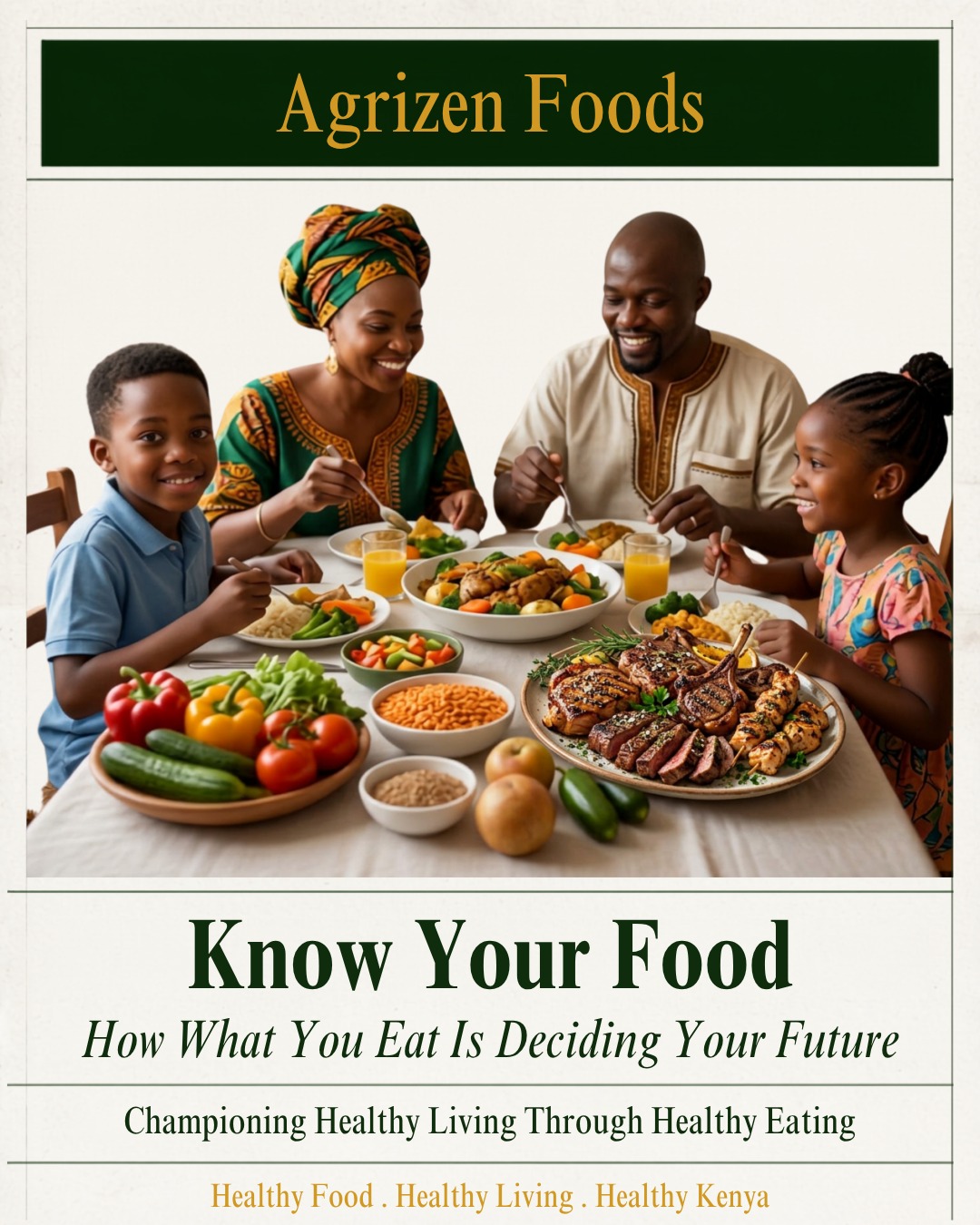
Know Your Food.
How, What You Eat Is Deciding Your
Future.
By Agrizen Foods Championing Healthy Living through Healthy Eating
Introduction: The Power on Your Plate
Every meal you eat is either fighting disease or feeding it. This is not a metaphor — it is science. In Kenya today, the food choices millions of people make daily are quietly determining whether they will live long, energetic lives or spend their productive years managing preventable illnesses. The good news is that knowledge is power, and understanding what you put on your plate is the first step toward reclaiming your health.
At Agrizen Foods, we believe that healthy living begins with healthy eating, and healthy eating begins with knowing your food.
What Does "Knowing Your Food" Mean?
Knowing your food goes beyond reading a label. It means understanding:
- Where your food comes from, was it grown with chemical pesticides or through ethical, organic farming?
- What nutrients it contains, does it nourish your body or merely fill your stomach?
- How it was processed, has the journey from farm to table stripped away its natural goodness?
- What it does inside your body, does it reduce inflammation, strengthen your immunity, and protect your organs, or does it do the opposite?
Food is not merely fuel. It is information. Every bite communicates with your cells, your hormones, your immune system, and your gut microbiome. The quality of that communication determines the quality of your health.
The Health Benefits of Eating Whole, Healthy Foods
1. Fruits and Vegetables: Nature's Medicine Cabinet
A diet rich in fruits and vegetables delivers a broad spectrum of vitamins, minerals, antioxidants, and dietary fiber that protect the body on multiple levels. Vitamin C from citrus fruits and leafy greens boosts immunity and promotes wound healing. Potassium found in bananas and sweet potatoes helps regulate blood pressure. Antioxidants in berries and dark leafy greens combat oxidative stress, reducing the risk of cancer and heart disease.
2. Whole Grains and Legumes: Sustained Energy and Gut Health
Unlike refined carbohydrates that spike blood sugar, whole grains such as sorghum, millet, brown rice, and oats release energy slowly, keeping you fuller for longer and preventing blood sugar crashes. Legumes, including beans, lentils, and cowpeas — are powerhouses of plant-based protein and fiber, feeding beneficial gut bacteria and reducing cholesterol levels naturally.
3. Lean Proteins and Healthy Fats: Building and Protecting
Proteins from clean, ethically raised animal products or plant sources support muscle repair, enzyme production, and immune function. Healthy fats, particularly omega-3 fatty acids found in fish, avocado, and certain seeds, protect the heart, support brain function, and reduce systemic inflammation.
4. Organic Foods: Clean Nutrition Without the Chemical Burden
Organically grown foods are produced without synthetic pesticides, herbicides, and fertilizers. Research consistently shows that organic produce contains higher concentrations of beneficial compounds such as polyphenols and flavonoids while eliminating the toxic load that comes with conventionally farmed alternatives. For Kenyan families, choosing organic means protecting their children's developing systems from endocrine-disrupting chemicals linked to hormonal disorders, neurological conditions, and developmental delays.
5. Ethically Sourced Food: Good for You, Good for the Planet
Ethical sourcing ensures that food is grown in ways that preserve soil health, protect water sources, and support farming communities. Food grown in healthy soil is nutritionally superior, mineral-rich, flavorful, and dense in the compounds your body needs. When you choose ethically sourced food, you are investing not only in your personal health but in the sustainability of the food ecosystem that feeds future generations.
The Silent Epidemic: Diet-Related Diseases in Kenya
Kenya is facing a health crisis that many Kenyans do not yet fully recognize. While infectious diseases such as malaria and tuberculosis have long dominated public health conversations, a new and equally dangerous threat has been rising steadily I.e. non-communicable diseases (NCDs) driven largely by poor diet.
The Data Is Alarming
Kenya is undergoing a rapid nutrition transition. Urbanization, changing lifestyles, and the flood of ultra-processed cheap foods into local markets have fundamentally altered how Kenyans eat. The consequences are showing up in clinics and hospitals across the country.
Cardiovascular disease and cancer are now among the leading causes of death linked to unhealthy lifestyles, accounting for more than a third of all deaths in Kenya, approximately 35 to 39 percent. What is especially troubling is that a significant proportion of these deaths occur in individuals under 40, meaning that younger, economically productive Kenyans are increasingly at risk.
A recent survey in western Kenya found that hypertension prevalence stood at 13.9% among known cases, with confirmatory testing revealing an additional 16.7% of adults living with undiagnosed high blood pressure. For diabetes, known prevalence was 8.7%, with an additional 9.1% uncovered through screening. Nationally, obesity affects roughly 10% of Kenyan adults by general BMI measures, with central obesity affecting as many as 37%, particularly among women.
The economic cost is staggering. Managing type 2 diabetes in Kenya cost an estimated Sh74.5 million in 2021 alone, with kidney disease complications accounting for nearly 60% of that total.
"We are seeing patients in their thirties with hypertension, diabetes, and even strokes. This was unheard of a generation ago. Unhealthy diets are fueling a silent epidemic that is overwhelming our clinics."
Kenya's Director General for Health, Patrick Amoth, has warned: "If we do not act now, the cost of treating diet-related NCDs will far exceed what we are already struggling with in terms of infectious diseases."
Key Diet-Related Diseases Affecting Kenyans
Type 2 Diabetes
Driven by excessive consumption of refined sugars, white flour products, and processed foods, type 2 diabetes disrupts the body's ability to manage blood sugar, leading to nerve damage, kidney failure, blindness, and heart disease. Kenya's urban poor are particularly vulnerable, as cheap sugary snacks and processed carbohydrates form the backbone of their daily diet.
Hypertension (High Blood Pressure)
High salt intake, low fruit and vegetable consumption, and excess weight are the primary dietary drivers of hypertension. Left unmanaged, it is a leading cause of stroke and heart attack. With nearly half of Kenyans unaware of their blood pressure status, hypertension is rightly called the "silent killer."
Obesity and Overweight
Kenya's national surveys show that central obesity, excess fat around the abdomen, affects more than a third of the adult population. Obesity is not merely an aesthetic concern. It is a gateway condition that dramatically raises the risk of hypertension, type 2 diabetes, certain cancers, and joint disease.
Cardiovascular Disease
A diet high in trans fats, refined carbohydrates, and excess sodium and low in fiber, fresh produce, and healthy fats progressively damages the heart and blood vessels. Coronary heart disease and stroke are now among the top NCD killers in Kenya.
Nutritional Deficiencies
Even as diseases of excess grow, undernutrition and micronutrient deficiencies remain significant, particularly anemia from iron deficiency and vitamin A and zinc deficiencies in children, driven by reliance on nutritionally depleted processed foods.
Agrizen Foods: Championing Healthy Living Through Healthy Eating
At Agrizen Foods, we have built our entire mission around one conviction, that every Kenyan deserves access to food that is good for them, good for the farmers who grow it, and good for the land that sustains us all.
Who We Are
Agrizen Foods is a Kenyan agri-food company dedicated to providing clients with organic, ethically sourced foods through a seamless e-commerce platform. We work directly with responsible farmers who use sustainable, chemical-free growing methods, ensuring that the produce that arrives on your table retains its full nutritional integrity.
What We Offer
Through our e-commerce platform, Agrizen Foods brings a wide range of healthy, organically grown foods directly to your door:
- Fresh Organic Produce, Seasonal fruits and vegetables grown without synthetic pesticides or chemical fertilizers. Rich in vitamins, minerals, and antioxidants that support immunity, digestion, and disease prevention.
- Value Added Products, Wholesome, additive-free products including nourishing bone broth, pure tallow, and natural sausages made without preservatives, artificial flavorings, or fillers, real food, honestly made.
- Clean Animal Products, ethically raised meats, eggs, and dairy from animals fed natural diets and raised without routine antibiotic or hormone use.
- Natural Pantry Staples, natural honey, herbal teas, and spices sourced from verified organic and sustainable suppliers.
Why Ethical Sourcing Matters
Ethical sourcing is the backbone of the Agrizen Foods promise. We partner only with farmers who:
- Practises sustainable agriculture that replenishes rather than depletes the soil
- Avoid synthetic chemicals that compromise product safety and environmental health
- Operate with transparency, allowing full traceability from farm to consumer
- Support fair wages and dignified working conditions for agricultural workers
This commitment means that when you choose Agrizen Foods, you are not just buying groceries. You are investing in a food system that prioritizes your family's health, the livelihoods of Kenyan farmers, and the long-term sustainability of the environment.
Organic Food: Not a Luxury, an Investment
A common misconception is that organic food is a luxury reserved for the wealthy. At Agrizen Foods, we challenge this narrative. The true cost of food must include the long-term cost to your health. The short-term savings of choosing cheap, chemically grown, or ultra-processed foods are far outweighed by the medical bills, lost productivity, and reduced quality of life that come with diet-related diseases. Our e-commerce platform is designed to make the healthy choice convenient, affordable, and accessible, wherever you are in Kenya.
Simple Steps Toward a Healthier Plate
- Crowd out processed foods gradually, rather than eliminating all processed foods at once, begin adding more whole foods to each meal. As whole foods take up more space on your plate, processed foods naturally become less central.
- Eat more color, a colorful plate of vegetables and fruits signals a diversity of nutrients. Aim for at least three different colors at every meal.
- Choose whole over refined, where possible, choose brown rice over white, whole grain ugali over refined flour products, and fresh fruit over fruit juice.
- Read ingredients, not just labels, marketing terms like "fortified," "natural," or "low fat" can be misleading. Look at the actual ingredient list. If you cannot recognize most of what is listed, put it back.
- Know your source, with Agrizen Foods, you know exactly where your food comes from, how it was grown, and what it contains. This transparency is the foundation of truly knowing your food.
Conclusion: Your Food, Your Future
The relationship between what we eat and how we live is not a theory, it is a documented reality playing out in clinics, hospitals, and homes across Kenya every single day. The rise of hypertension, diabetes, obesity, and cardiovascular disease in our communities is not inevitable. It is, in large part, preventable, through informed food choices.
Agrizen Foods exists to make those choices easier. Through our ethically sourced, organically grown food offerings and accessible e-commerce platform, we are removing the barriers between Kenyan families and the nutrition they deserve. We are not just selling food. We are championing a movement, one where Kenyans know their food, trust their food, and are made healthier by it.
Know your food. Choose well. Live fully.
Agrizen Foods — Healthy Food, Healthy Living, Healthy Kenya.
Shop our full range of organic, ethically sourced foods at www.agrizenfoods.com