
AGRIZEN FOODS
Curators of the Laikipia Harvest
What's Really On Your Plate?
Livestock Health, Dumpsite Grazing, and the Safety of Meat Sold in Nairobi
August 2026
Nairobi's meat trade moves through two very different worlds. In one, licensed abattoirs, veterinary inspectors and refrigerated trucks work to keep the food chain safe. In the other, informal keepers, roadside slaughter slabs and scavenging animals feed a parallel market that reaches the same butcheries, kiosks and nyama choma joints across the city. The line between the two is thinner than most consumers realise, and understanding it is the first step toward eating more safely.
Livestock That Live Where the City Dumps Its Waste
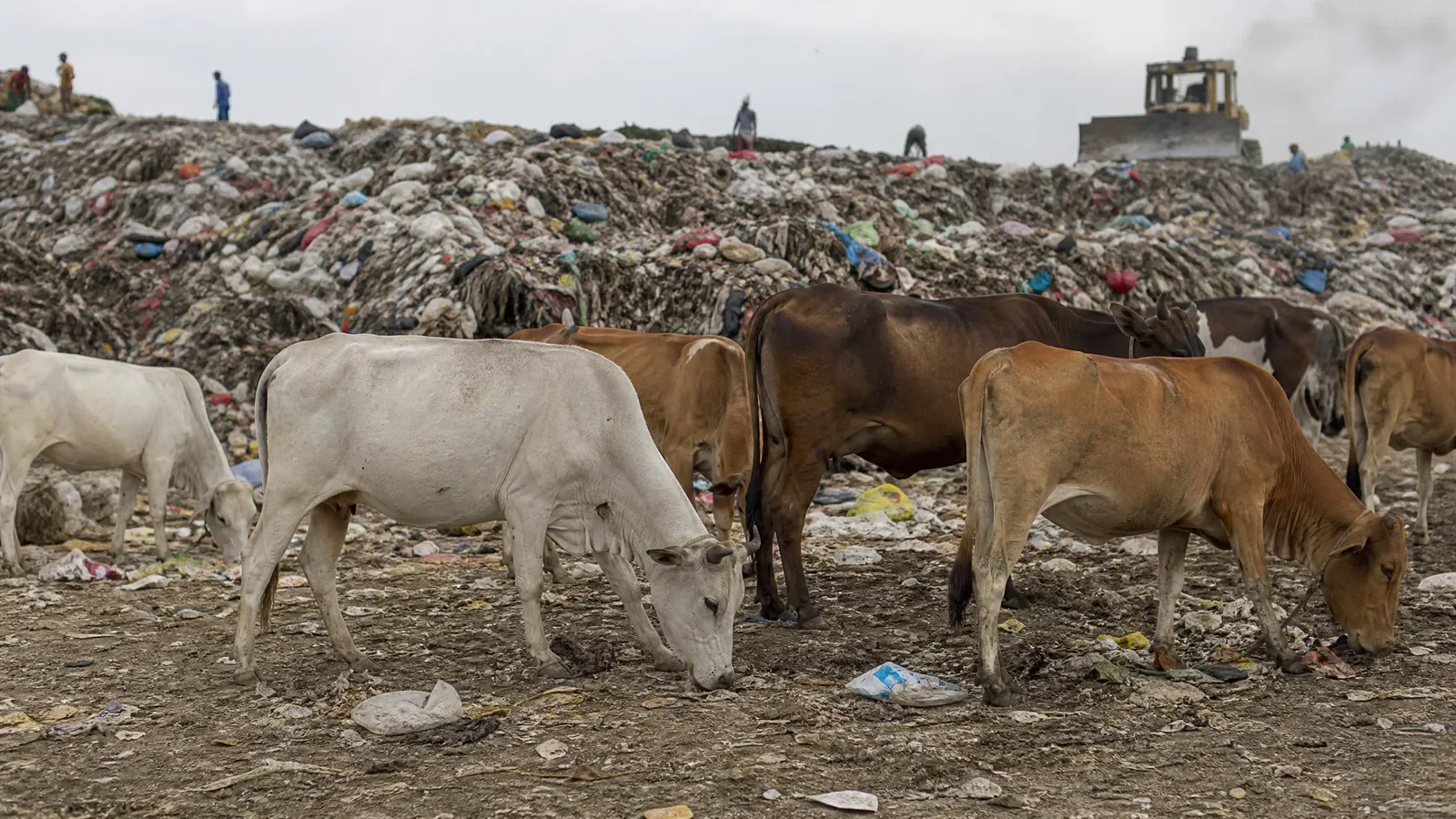
Kenya generates roughly 2,000 tonnes of garbage a day in Nairobi alone, and a large share of it ends up at informal dumping grounds such as the Dandora dumpsite, home to a densely populated settlement of an estimated quarter-million residents. Researchers from the University of Nairobi's Department of Clinical Studies and international collaborators have documented for years that livestock, including cattle, goats, sheep and pigs, are left to roam and scavenge freely in Nairobi's informal settlements, including directly on and around dumpsites, where they feed on whatever organic matter, plastic wrapping and waste they can find.
This is not a fringe practice. Peer-reviewed research on Nairobi's urban livestock systems describes free-range scavenging, particularly of pigs, as one of the most common ways low-income households keep animals in the city, with dumping sites specifically named as feeding grounds. Zero-grazed animals fare little better in some cases: many are fed market waste and restaurant swill rather than formal feed, which researchers note increases the movement of pathogens between animals and, ultimately, people.
What Scientists Found in the Blood of Dandora's Animals
A peer-reviewed toxicology study published in Environmental Pollution sampled the blood of pigs, goats, sheep and cattle grazing at the Dandora dumpsite and compared them with animals from a cleaner control site. The results were stark: cadmium and lead levels in the animals' blood were markedly elevated, with lead concentrations reaching up to roughly 2,710 micrograms per kilogram, and pig blood lead levels averaging around 2,600 micrograms per kilogram, high enough that the study's authors flagged a real risk of lead poisoning in pigs and cadmium exposure risk for people who eat meat from Dandora-raised livestock. The same body of research has found elevated lead, mercury, cadmium, copper and chromium in the dumpsite's soil, meaning the contamination cycle starts well before any animal is slaughtered.
Separately, disease-focused surveillance in Nairobi has linked free-roaming livestock to significant carcass condemnation at slaughter. A multi-year review coordinated with the Nairobi and Environs Food Security, Agriculture and Livestock Forum recorded an average of about 1,700 cattle carcasses condemned annually for hydatid cyst disease and roughly 260 more for cysticercosis (a parasite linked to poor sanitation and scavenging), with hundreds of additional sheep and goat carcasses condemned for hydatidosis each year over the study period.
A Fragmented Meat Safety System
Kenya's meat sector is legally well governed on paper. The Meat Control Act (Cap. 356) requires that all food animals be slaughtered only in licensed slaughterhouses under a designated inspecting officer, that every carcass be inspected and stamped before sale, and that meat be transported in sealed, licensed containers with a valid movement certificate. In practice, enforcement is uneven. A 2024 peer-reviewed study by the International Livestock Research Institute (ILRI) and University of Nairobi researchers, which tested 200 beef samples bought directly from butcheries in Kawangware, Kangemi, Waithaka and Huruma, found that while most preparation surfaces were clean, roughly one in four butcher shops had visibly dirty, blood-caked surfaces, and researchers observed unsafe handling practices such as storing raw meat and offal together and reusing dirty cutting equipment between customers.
Government officials have repeatedly acknowledged the gap between regulation and reality. In December 2025, Kenya's Director of Veterinary Services issued a formal advisory to all county governments warning that meat sold outside licensed channels, including from illegal slaughter points, is often produced in unhygienic conditions and may carry harmful micro-organisms, drug residues or other contaminants capable of triggering disease outbreaks. Weeks earlier, the Ministry of Health's Principal Secretary for Public Health ordered a nationwide closure of butcheries selling uninspected meat, specifically warning Kenyans that meat bought without inspection can make people seriously ill. Investigations by local media have also traced meat from sick and illegally slaughtered animals moving from rural counties such as Narok and Bomet into Nairobi's market, including into institutions that buy in bulk, such as schools.
Why This Matters for a Nairobi Steak
A steak, a kilo of goat ribs or a plate of nyama choma carries the health history of the animal it came from, including what that animal ate, drank, and was exposed to for months before slaughter. Livestock raised on or near dumpsites can accumulate heavy metals in their tissue and blood, carry a higher parasite burden from contaminated ground, and if they pass through unlicensed slaughter points, bypass the post-mortem inspection designed to catch diseased carcasses before they reach a butchery counter. None of this is visible once the meat is cut, seasoned and grilled.
What Consumers Can Actually Do
- Buy only from butcheries with a visible, current meat inspection stamp and a valid county operating license. The Meat Control Act requires both.
- Ask where the meat was slaughtered. Reputable butcheries can name a licensed abattoir; hesitation or vague answers are a warning sign.
- Be cautious with unusually cheap meat, especially around festive periods when the Ministry of Agriculture has repeatedly warned that illegal slaughter and sales spike.
- Favour traceable supply chains: meat and produce from vetted farms and curators who can account for how animals were raised and fed.
- Cook meat thoroughly. Proper cooking temperatures kill most bacterial and parasitic risks, though they do not remove accumulated heavy metals.
- Report suspected illegal slaughterhouses or uninspected meat sales to county public health or veterinary services offices.
The Bigger Picture
Urban livestock keeping is not going away in Nairobi; for many households it remains an important source of food, income and savings. But researchers and regulators agree that the informal, scavenging end of that system, particularly animals raised on dumpsites like Dandora, carries measurable and documented health risks: heavy metal accumulation, elevated parasite condemnation rates, and a higher chance of slipping past inspection altogether. Closing that gap will take sustained enforcement of the Meat Control Act, better urban waste management so livestock cannot access dumpsites in the first place, and consumers who know what questions to ask before they buy. Until then, the safest steak in Nairobi is the one whose full journey, from farm to feed to slaughterhouse, you can actually trace.
Sources
Nakayama, S.M.M. et al. (2015). "Metal extent in blood of livestock from Dandora dumping site, Kenya." Environmental Pollution, ScienceDirect.
Wabacha, J. et al., Department of Clinical Studies, University of Nairobi / Mazingira Institute, NEFSALF carcass condemnation surveillance data (cityfarmer.org).
Alarcon, P. et al. (2017). "Urban Livestock Keeping in the City of Nairobi." Frontiers in Veterinary Science / PMC.
Koech, R. et al. (2024). "Evaluating microbiological safety and associated handling practices of butchery-sold meat in Nairobi, Kenya." Frontiers in Sustainable Food Systems (ILRI / University of Nairobi).
Government of Kenya, Meat Control Act (Cap. 356), Kenya Law.
Ministry of Health / Ministry of Agriculture and Livestock advisories, October to December 2025 (Kenyans.co.ke, The Standard, ynews.digital).
Daily Nation investigation, "Inside dark world of sick animal meat," September 2024.
This report is provided for public awareness. It is not a substitute for official food-safety guidance from Kenya's Ministry of Health or Ministry of Agriculture and Livestock Development.